The Strategic Power of Discernment
Sep 02, 2026
Have you ever found yourself second-guessing your ability to operate in the gift of discernment or to hear the voice of God for important decisions? If so, read on. You are not alone.
Charles Spurgeon, a noted English preacher, is quoted as saying that discernment is not knowing the difference between right and wrong (most everyone can do that); it is the difference between knowing right from almost right.
As deception techniques grow more sophisticated, our need for discernment grows too. We need the added advantage of seeking the Holy Spirit to know when to pursue or turn down a potential deal, whether to hire a job applicant, or make a thousand other decisions where the gift of discernment gives us an added advantage. Recently, as I have been having conversations with business owners and operators, something became very apparent. Many of the people I was talking to mentioned in passing, “I don’t really trust my ability to discern anymore. I got it really wrong this one time, and I just don’t think it’s an area I am strong in.”
Listen to the podcast here: Heaveninbusiness.com/podcast
One lady in particular told me how she got married in her twenties, and the marriage ended in divorce. She went on to explain that she had rationalized that she was not good at discernment, and from the point of the dissolution of her marriage, she had not trusted what she was sensing from the Lord. As we talked, I began to see how the enemy had deceived her into thinking she lacked this gift, when the opposite was true.
This lady is a smart and perceptive businesswoman. From the moment I met her, I could tell she was not only intelligent but a good judge of character. I was impressed not only by her business acumen but also by her ability to interact with people and build relationships. How did a woman like this get to the place where one decision had led to a life of second-guessing pretty much everything she saw and felt? And was there another way to look at how she got there?
As we talked, I began to give her a different perspective. “Hey, you were in your twenties when you got married, right?” “Yes, I was,” she said. “Can I tell you, then, some good news? You are not the same person you were when you got married. Your twenty-something self may have got it wrong, but more than two decades have gone past. You are a different person now. You are older and wiser. Not the same person at all. Do you realize that one decision 25 years ago is holding you hostage to something that may not even be true?”
This was a new thought to her. “Also,” I said, “I have another thought for you. Is it possible you didn’t even get it wrong? Maybe he was the perfect guy for you, but he just made a decision somewhere along the way that made him unable to follow through on being the man he could have been. Maybe it wasn’t even a wrong decision on your part. Maybe he made a series of bad decisions that changed the course of your relationship.” This was also a new thought for my friend.
“I have one more thought for you. Even if you did get it wrong, every other time I’ve seen you in action, I’ve seen you use great discernment. In fact, if you think now, I bet you could name a ton of times when you perceived rightly.” As she thought for just a moment, her mind, she told me, was flooded with all the times she had gotten it right. I watched as the Lord helped my friend see that she had been fed a line that seemed true when her marriage ended but was now causing her to disqualify herself from making great decisions.
As I pondered what I had just seen the Lord do with one friend, I realized this kind of story is an epidemic among so many people I’ve talked to. They thought they heard God about a relationship or a business deal, and when it goes horribly wrong, they conclude they are really bad at discernment or hearing God's voice. Here’s the truth: Maybe you got it wrong, or maybe the person on the other side of that deal changed after the fact. And even if you did, one missed time doesn't make you a bad discerner.
Hebrews 5:14 But solid food belongs to those who by reason of use have their senses exercised to discern both good and evil. (emphasis mine)
Hebrews tells us that we use our senses so that we grow in our ability to discern good from evil. It doesn’t all happen overnight, and we don’t always get it right. And just as we would never scold a child learning to walk for falling over, we need to give ourselves that same grace. If a toddler learning to walk falls, we encourage them to get up and try again. We know they are destined to walk…it’s in their DNA. Discerning is part of the package deal that you get as a child of God. But you need to exercise it and not stop learning if you get it wrong occasionally. If you are just getting started, get some wise counsel as you make big decisions and learn from your mistakes.
1 Timothy 4:14 tells us not to neglect the gift that was given to us. We are given gifts to help us lead a life that honors the Lord, but they come in seed form, and it is up to us, with the help of the Holy Spirit, to grow in them.
Here are the two ends of the spectrum I’ve seen as people respond to or react to the gift of discernment: On one end, people have become highly distrustful of others. They aren’t necessarily using the gift of discernment, but they have become highly suspicious of anyone with a different viewpoint than they have on a range of topics. They will tell you loudly that they ‘discerned’ something negative about a person, and they use that to justify disengaging from that person. That’s not actually discernment…it’s simply suspicion with a spiritual-sounding name. How can you tell? Discernment is a gift of the Spirit. In my experience, it comes with a good dose of God's love, which you use to respond to the person or situation. Suspicion doesn’t. It simply labels the other person as ‘bad’ in some way and walks away.
The other end of the spectrum is the person who just believes everybody and takes them at their word. They often end up getting taken advantage of because they believe that ‘love believes the best.’ Love does believe the best, but it doesn’t stay ignorant of the issues. Jesus knew that Judas would betray him and stayed engaged with him anyway.
Somewhere in the middle of those two extremes lies the healthy use of the gift of discernment. I need to know who to hire, who to partner with, or whether to expand my business into a new market. God has information that can help me make better decisions, and He wants to share that with me. Discernment doesn’t replace due diligence; it happens alongside it. I call the referees, check the documents, and ask God to communicate what I need to know.
I find that discernment about a person or business opportunity often comes as a sense of peace or hesitation about moving forward. Most times for me, it doesn’t come with any details about why I'm hesitant…and that’s the problem. My rational mind can’t see why I shouldn’t hire the guy that looks so good on paper, or why I should avoid that particular city when I‘m considering expansion, so I’m tempted to ignore the hesitation or to create a reason why I won’t proceed. So instead of simply trusting that my Friend Jesus is warning me not to go into business with that person, I go into business, or I come up with a ‘rational’ reason. I felt a hesitation, so he must be bad news. Now, when I communicate my hesitation, I embellish my sense and tell people, “I sense that they are bad news for us.”
The truth is, there could be a thousand reasons that person isn't the right fit for you or your company. Maybe they are about to get offered a better job in three months, and the lord is trying to help you avoid the cost of training them only to have them leave. Maybe they just aren’t a good relational fit. They are not a bad person, just a bad fit. Be careful of making up your own ‘story’ to justify what you are sensing. The Lord doesn’t need to tell you why He is telling you something. Trust His heart, and act accordingly.
Here are some tips for the journey of growing in discernment:
- Be wary of ‘discernment’ that has you justifying disengaging with people. The Lord generally shows you whether or not to partner with someone, not all their dirty laundry.
- Be willing to follow your sense, even if it doesn’t make rational sense to your natural sense of wisdom. Remember that God sees more than you do, even into the future.
- Don’t fall into the trap of becoming critical of someone to give you language for something you can’t explain.
- Let go of times in the past where you feel like you missed it and realize that we are all learning.
- Be aware of your own biases. If you were hurt or abused by a big Canadian guy with a red beard, the next big red-bearded Canadian that comes along is possibly going to stimulate a response in you that is a natural reaction to what you suffered. Be aware of that ‘bent’ and be diligent to get others to speak in to any decision with that kind of person involved.
If you found this helpful and want to dive in deeper, here are two options:
- Heaven in Business Growth Path – 12-month intentionally guided pathway to grow in partnership with God, build better business and multiply Kingdom impact. FMI see Heaveninbusiness.com/growth-path
- Individual coaching with Janine Mason - Heaveninbusiness.com/coaching
Next Steps:
- Subscribe for weekly insights: Heaveninbusiness.com/newsletters/weekly-insights/subscribe
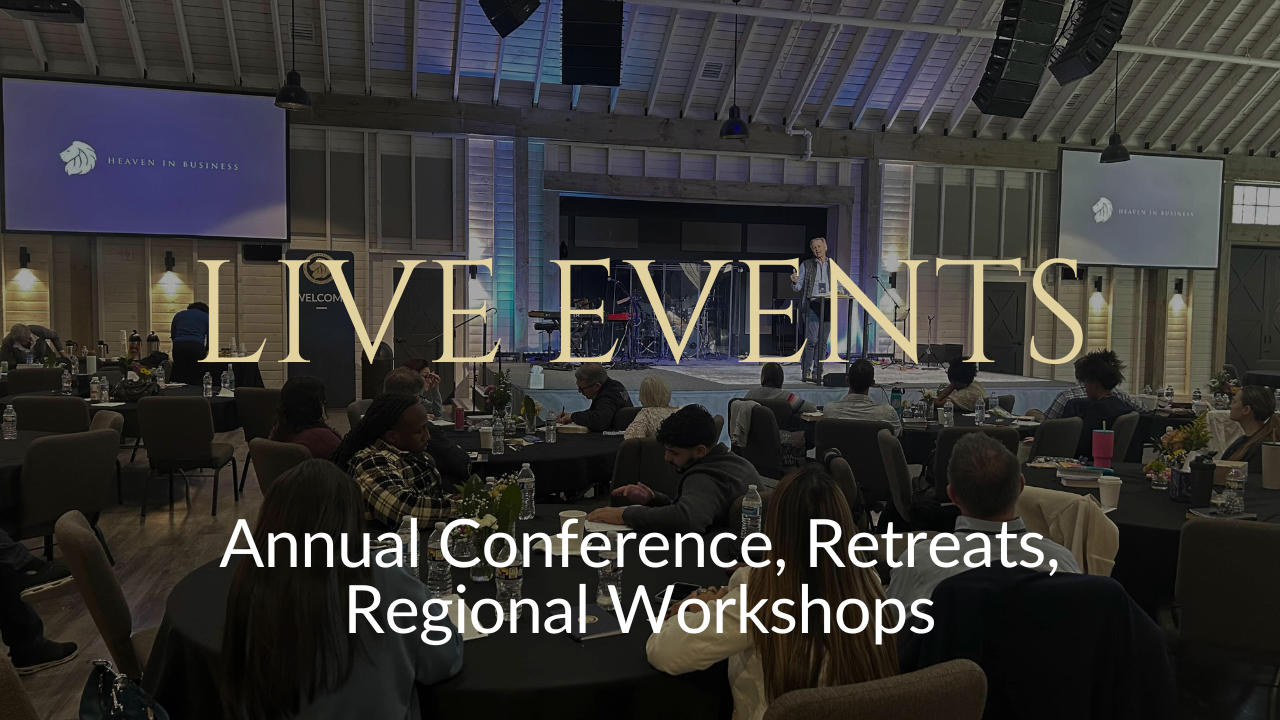
- Join us at an upcoming event: Heaveninbusiness.com/events
- Subscribe on YouTube: Youtube.com/@heaveninbusiness
- Share this with someone you know who will be challenged and encouraged.