What the Bible Says About Business
Jul 22, 2026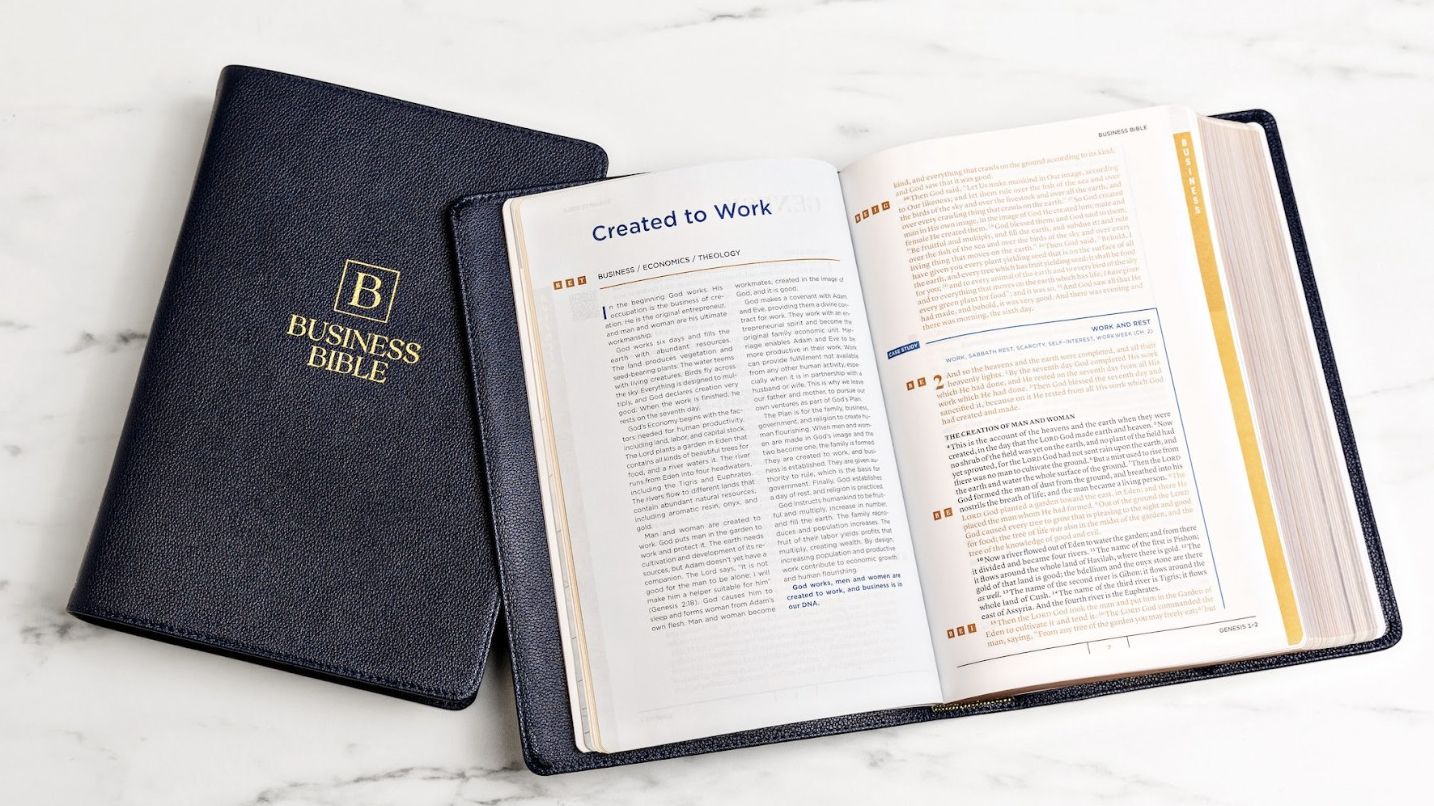
Helping the World Discover What the Bible Says About Business
Most Christian business leaders have been told some version of this: Be ethical, be generous, give money, and be a good steward.
All of that matters. But what if the Bible has far more to say to business people than that?
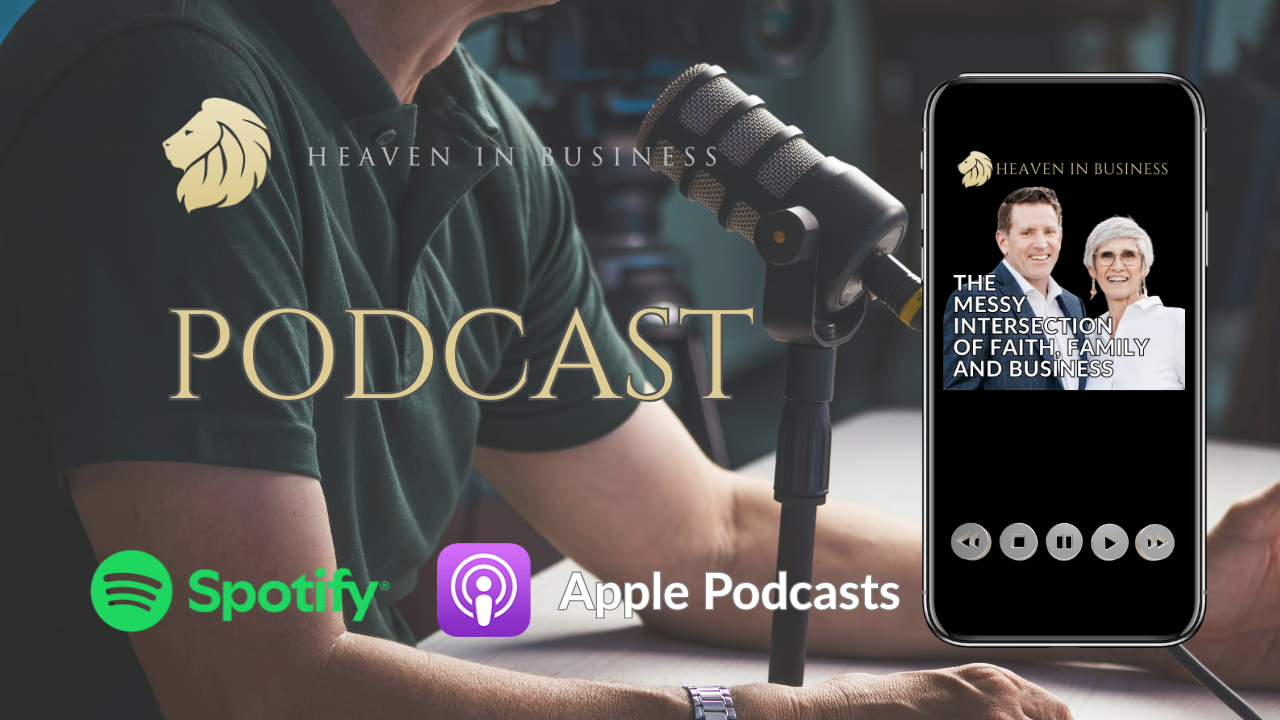
Listen to the podcast here: Heaveninbusiness.com/podcast
What if Scripture does not merely tell us how to behave at work, but reveals the God who designed work in the first place? What if the Bible speaks to business, investment, multiplication, stewardship, crisis, character, calling, and the daily decisions of Monday through Friday?
That is the conversation I had with Nicholas Leone, CEO and founder of the Business Bible (BusinessBible.com).
Nicholas is not the kind of person many would expect to create a Bible for business people. His background includes hockey, Wall Street, hedge funds, financial crisis, and a lifelong hunger for the Word of God.
But his story is exactly why this conversation matters.
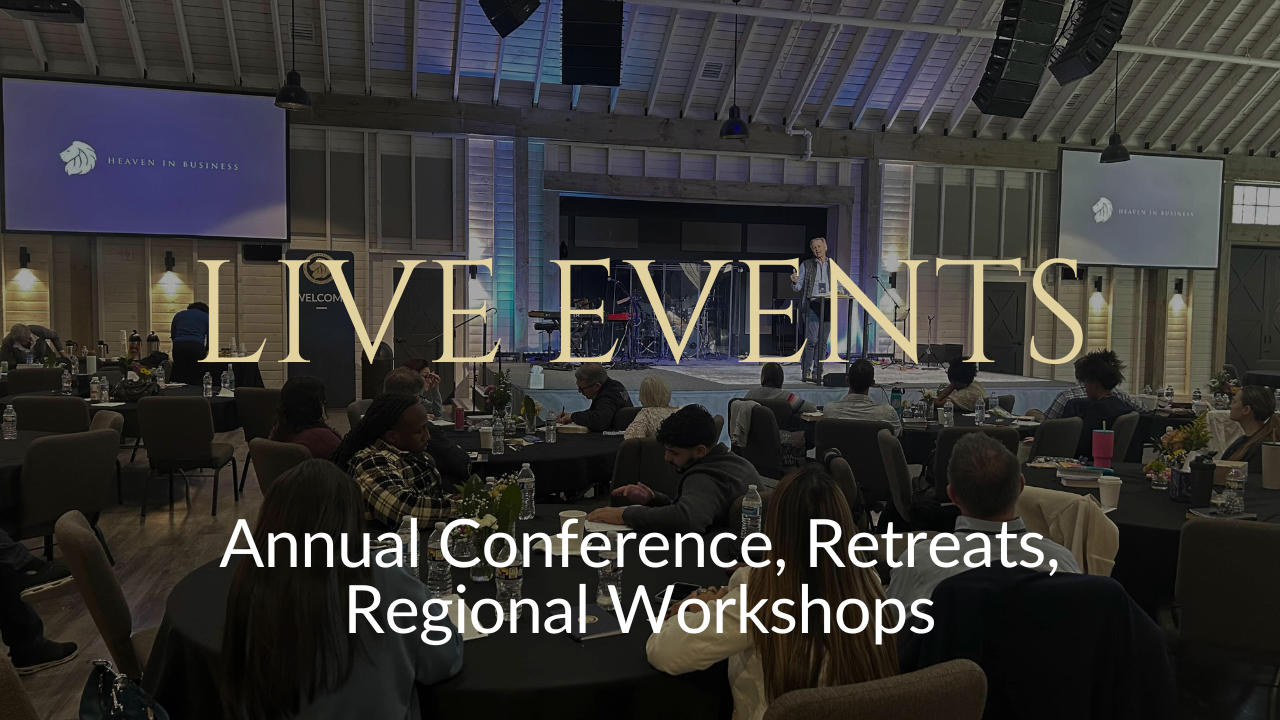
If you want to explore the resource Nicholas has created, visit BusinessBible.com and check out the Business Bible and the Business Bible app. And if this conversation stirs something in you - a serious hunger to bring the Word of God into your leadership, decisions, and daily business life - join us this August in Dallas (Heaveninbusinesslive.com) for the Heaven in Business Conference.
A Hunger for the Word Before He Understood the Word
Nicholas’ journey began in an unusual way.
As a boy, he had recurring dreams of the rider on the white horse from Revelation 19, whose name is “the Word of God.” He had not yet read the Bible, but when he later saw that passage opened in front of him, he recognized it immediately.
Something in him knew, “That was what I saw!”
That divine experience locked in a lifelong desire to understand the Word of God.
He eventually traveled, studied, went to Fuller Seminary, and pursued Scripture deeply. But he did not do that simply to become a professional minister. He wanted to know God. He wanted to know the God of the Word and understand how Scripture equipped him for sport, business, and life.
That distinction matters.
For many business leaders, the Bible can feel either distant from daily decisions or reduced to a moral checklist. Nicholas’ life challenges that. He pursued the Bible not as an escape from work, but as a foundation for work.
He described it this way: he went to Wall Street “with the Bible inside.”
Called to Business
Nicholas spoke about being called to Wall Street. By that, he did not mean Wall Street was easy, holy, or free from compromise. He meant God had given him abilities - speaking, economics, math, and money management - and those abilities needed to become skills.
Wall Street became one of the places where those abilities were tested, refined, and formed.
That is an important word for Christian business leaders. Calling is not only about church platforms, ministry roles, or explicitly spiritual assignments. Calling also includes using the abilities God has given us for His glory and purpose in the real world.
Nicholas had three loves: sports, business, and the Bible.
Rather than seeing those as competing parts of his life, he began to see how God could work through all of them.
Hockey taught discipline, endurance, and, in his own humor, the biblical principle that “it is better to give than receive” - learned the hard way in the penalty box.
Wall Street taught discipline, markets, pressure, risk, multiplication, and crisis.
And the Bible interpreted it all.
The Bible Is Not Just a Manual for Morality
One of the strongest themes in the conversation was this: the Bible is not merely a book of spiritual ideas disconnected from practical life.
Yes, it teaches ethics.
Yes, it teaches generosity.
Yes, it teaches stewardship.
But it also reveals the God who designed work.
Nicholas said the Bible is a book about life and work. It speaks to creation, labor, rest, investment, fairness, wages, crisis, cycles, generosity, accountability, and multiplication.
That does not mean we reduce Scripture to a business textbook. It means we stop treating business as if God has nothing to say about it.
The Bible is not merely information about God. It invites us into relationship with God.
Jesus is not only the subject of Scripture. He is the living Word. As John 1 says, “In the beginning was the Word, and the Word was with God, and the Word was God.”
That was the thread running through Nicholas’ story. The goal is not simply to get biblical principles so we can win. The goal is to encounter the God of the Word and let Him shape our life and work.
Meeting Jesus on Wall Street
Nicholas had read the parable of the talents many times. Like many of us, he had heard it taught as a lesson on faithfulness: “Whoever is faithful with little will be entrusted with much.”
That is true.
But while working on Wall Street, he began asking a different question:
What is a talent?
A talent is not, first of all, a personality gift or a natural ability. In the biblical context, a talent was a financial weight and measure. Nicholas recognized that Jesus was talking about something very substantial: entrusted capital, stewardship, investment, multiplication, time, accountability, and return.
That realization opened his eyes.
He saw in the parable a process that any serious money manager would recognize: allocation according to ability, diversification, time, multiplication, and accounting.
For Nicholas, this was not merely an interesting insight. It was an encounter with Jesus in the middle of his work.
He saw that Jesus was not distant from business realities. Jesus understood stewardship, capital, risk, accountability, and multiplication. The parable was not only spiritually meaningful; it was also practically profound.
That discovery became one of the seeds of the Business Bible.
Crisis Asked the Deeper Question
Nicholas’ Wall Street career spanned multiple financial crises: the Asian financial crisis, the Russian financial crisis, the Latin American financial crisis, the dot-com crisis, and the global financial crisis.
He saw markets fall. He saw people lose jobs, homes, savings, and confidence. In the middle of that, he began asking a question:
Is there a better way to do business?
He did not hear much clear guidance from Wall Street. He also did not hear enough from the church beyond general counsel to be a good steward, give, and invest in eternity.
But Nicholas believed there was more.
If God created the world, designed work, owns everything, and intends to make all things new, then surely the Bible speaks to what we do Monday through Friday.
That led him back to Scripture.
He saw economic cycles in Leviticus 25. He saw preparation in the story of Joseph, who interpreted Pharaoh’s dream and instructed Egypt to save during years of plenty so they would be prepared for years of famine.
Nicholas observed that those who had saved and prepared were far better equipped during crisis. Scripture was not abstract. It was deeply practical.
When “Religion” Made Sense to a Wall Street Investor
One of the most powerful stories in the interview came from Nicholas's pitch to a fund-of-funds investor for his hedge fund.
The investor told him plainly that he did not think the Bible had anything to do with business.
Nicholas responded by asking a simple question:
Who invented how to value an asset?
The investor did not know.
Nicholas pointed him to Leviticus 25, where Moses records how to value land according to the number of years until the Jubilee and the land's yield.
The investor’s response was striking:
“That’s the first time religion ever made sense to me.”
Nicholas knew in that moment that this was part of what he was created to do: help the world discover what the Bible says about business.
That phrase matters: created to do.
Not merely called in a temporary sense. Not merely interested. Created.
The Business Bible
The Business Bible is not a new translation of Scripture. It uses the NASB text and adds business-focused articles, book introductions, case studies, and highlighted business principles.
Nicholas describes it as a topical Bible rather than simply a study Bible. It is designed to help business people see what is already present in Scripture.
He calls it the “gold letter edition.” Many people are familiar with red-letter Bibles, where the words of Jesus are printed in red. The Business Bible highlights business principles in gold.
Its purpose is not to replace the Bible. Its purpose is to help businesspeople discover what the Bible says about work, stewardship, economics, generosity, wages, the Sabbath, investment, multiplication, and leadership.
Nicholas said Bible stories are business case studies. That does not mean we force modern business categories onto the text. It means that many of the stories in Scripture involve real people making real decisions about resources, responsibility, justice, leadership, crisis, obedience, and faithfulness.
For business leaders, that is incredibly helpful.
You can learn more, order the Business Bible, or download the Business Bible app at BusinessBible.com.
A Bridge Between Pastors and Business People
Nicholas also made a strong point about pastors and ministry leaders.
The Business Bible can help bridge the gap between pastors and the people in their congregations who spend most of their week working in business.
Pastors know the Bible. Business people know the pressures, language, and demands of Monday-through-Friday work. The Business Bible helps create a shared language between those worlds.
That matters because many business leaders have not rejected Scripture. They simply do not know how to connect Scripture with the decisions they face every day.
They are not asking, “Does the Bible matter?”
They are asking, “Where do I start?”
Where Do I Start?
Nicholas’ answer was simple:
Start in the beginning.
The Business Bible includes an executive summary, articles, case studies, and notes that help businesspeople begin to see the Bible through the lens of work and business.
But the deeper invitation is not merely to get a tool. It is to encounter the God who authored the book.
The Bible works because the world is designed by God. Principles such as work and rest, fair dealing, compounding capital over time, generosity, and accountability are not random. They reflect design.
The goal is not just to get better business outcomes. The goal is to know God, align with His design, and participate in His work in the world.
And for those of us who want to bring the Word of God into our Monday-through-Friday life, the invitation is simple:
Start.
Open the Word.
Ask better questions.
Look for God’s design.
Let Scripture interpret your work.
And most of all, encounter the God of the Word.
Listen, Learn, and Join Us
Learn more about Nicholas Leone’s work, order the Business Bible, or download the Business Bible app at BusinessBible.com.
And if this conversation stirs something in you - if you want to be in the room with other business leaders who are asking how to hear God, build with God, and bring Scripture into daily business decisions - join us this August in Dallas for the Heaven in Business Conference.